
Alumni Stories: Omar Rodriguez
The Success Analyst
Omar Rodriguez uses skills he honed at CPRL to ensure the best outcomes for immigrant and minority students
June 2022
As a child, Omar Rodriguez (CPRL Spring 2018) emigrated with his family from Mexico to the United States. In public school—first in Riverside, California, and then, from third grade on, in Marietta, Georgia—he faced life-defining challenges: mastering social norms, learning English in classes that separated him from his peers and navigating the testing process as he moved from grade to grade.
By any measure, Rodriguez came out on top. The first person in his family to attend college, he enrolled initially at a community college, Georgia Perimeter College, to burnish his writing and other academic skills, then transferred to Georgia State University, where he got straight A’s his first semester, was accepted into the Honors Program (NKA Honors College) and graduated cum laude with a degree in economics from the university’s Andrew Young School of Policy Studies. He received financial support through the tuition assistance and GI Bill program from the Georgia Army National Guard and scholarships such as Georgia Perimeter College’s GPC Educational Achievement Program (GEAP) and Georgia’s HOPE Scholarship. After working as a Budget and Policy Analyst for Georgia’s Board of Regents, which oversees 26 public colleges and universities in the university system, he recently joined EY as a Senior Business Advisor for Assurance.
Rodriguez is justly proud of those accomplishments.
“There were so many times I wanted to give up, but I never gave up on myself,” he says. “My friends would say, ‘Omar, where have you been?’ But I was doing what I cared about most—getting an education, serving my country, learning to be disciplined and to take pride in what I was doing—and I had to let go of the distractions.”
Yet his education also has given Rodriguez perspective on the odds that minority and immigrant students must overcome.
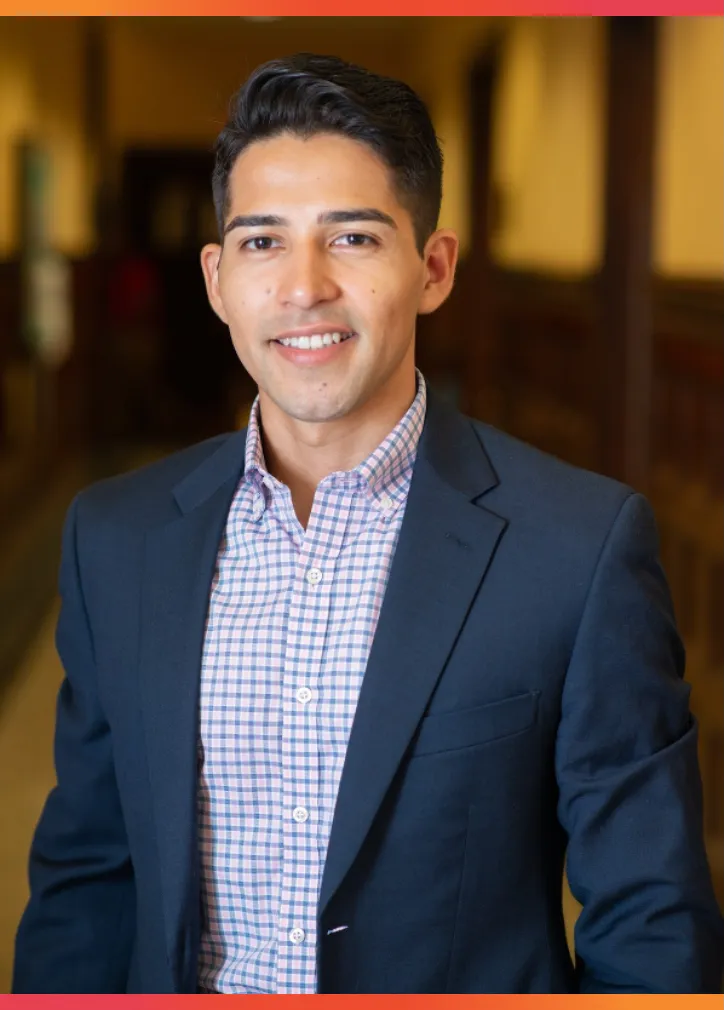
“Back then, I saw the challenges purely as opportunities, not as unfairness in the system, and I don’t regret that,” he says. “My objective was to get out of ESOL [English to Speakers of Other Languages] and pass my classes, become a better writer and reader. Now I question more of these practices, because I have a better awareness about what happens in the education landscape—how policies are put in place and how they actually play out. I tend to focus on marginalized people, asking questions like, ‘Is enrollment increasing for Blacks, Hispanics, Asians?’ ‘How are first-generation students progressing?’ ‘What resources are we making available to them?’”
He’s grateful to CPRL, and in particular its Founder, James Liebman, for shaping his approach to those questions.
“One thing my CPRL experience really engrained in my mind is the importance of understanding what’s going on in the field in order to ensure impactful policies.” And in line with CPRL’s model of Evolutionary Learning, having that “bottom-up input” is critical to adjusting policies in practice, he adds.
For example, in his CPRL student project, Rodriguez helped a national civil rights organization compare how different states were implementing the 2016 Every Student Succeeds Act (ESSA). The goal was to help the organization build a theory for legal intervention to ensure successful educational outcomes for all students.
“ESSA provides more flexibility than NCLB [No Child Left Behind, the legislation that preceded it] for states to define quality education – but that also means there’s no single benchmark,” Rodriguez says. “So, part of our work was to ask, What does equitable education mean locally? What does it mean to have quality education, and how does it differ from how other states and districts might be defining it? Are the right standards being implemented in the state? Are certain districts doing a better job, and if so, why?”
To a large extent the answers depended upon the provision of adequate resources – but how resources were being used mattered, too. “There were definitely some situations where districts with more resources were not getting the desired outcomes, and also some in which poorer, lower-resource districts were making gains. And again, that tended to happen when districts would create policies and processes that were one-size-fits all, without a sense of what was actually going on in different communities.”
"[In school], I saw the challenges purely as opportunities, not as unfairness in the system...Now I question more of these practices, because I have a better awareness about what happens in the education landscape—how policies are put in place and how they actually play out."
The work prepared Rodriguez to explore similar concerns at the higher education level. At Columbia University’s Teachers College, where he completed a master’s degree in Economics & Education in 2019, he turned an equity lens on student loan debt.
“I was about to finish graduate school, and I had accumulated student loan debt myself despite receiving the Second Century Scholarship,” he says. “I was also thinking about a career in higher ed finance. So I thought, how can I best prepare myself for what’s next, personally and professionally? I was fortunate to work with a professor, Judith Scott-Clayton, who is a national expert on financial aid and student loan debt. And because of the research I did, I got interested in solutions that make it easier for students to pay for loans and not have to annually renew or provide data.”
Smoothing students’ pathways was at the core of Rodriguez’s previous role in the University System of Georgia (USG). He supported USG Chancellor Steve Wrigley’s priorities in “making college more affordable, more efficient and ensuring more Georgians enter the workforce with a college credential.” These priorities guided how the Budget Office supported the public institutions in allocating and managing resources available for operating and capital expenditures, including Momentum Year Initiatives. To a large degree, his work involved ensuring funding for aspects of the system’s Momentum Year Initiative, a suite of strategies that support students during their crucial first year and, ultimately, guide them in defining their academic and career focus and completing their degrees on time.
“The Momentum Year Initiative is all about how to improve the undergraduate experience – and when I first learned about it, it really brought back my own experiences,” he says. “I sought out mentors and tutoring and help in obtaining books. And, in fact, the university was already making those resources available then. But this brings it all together and makes it even more accessible.”
There are some important new dimensions, too. Students support one another as part of a formal cohort. Changes in remedial education that include intensive tutoring in conjunction with courses being taken for credit have led to big jumps in student success rates. First-year students are also urged to take at least three courses connected to their chosen academic focus – a practice associated with a 40 percent greater likelihood of graduating.
“In the past, it typically fell on the different departments to provide these kinds of supports,” Rodriguez says. “So it’s exciting to see it all come together.”
Still, for all the advantages that centralization and coordination can provide, Rodriguez, who recently reenlisted in the Army National Guard to become a military officer, believes that success still comes down to the individual.
“I tell my niece, who will become the second person in my family to get a university degree, that everyone is on their own time, so don’t feel pressured or compare yourself with others,” he says. “If you really want it, you just have to go after it.”
In Their Own Words
Our alumni network now includes more than 500 leaders, advocates, and champions dedicated to improving school systems and other public sectors. Some alumni work directly with teachers, families, and students, ensuring access to high-quality education. Others work indirectly—supporting improvement from inside private sector organizations. In Their Own Words captures the many and varied ways our alumni lead and improve organizations in education and other public sectors.
About the Author
Joe Levine writes about education, law, science and medicine, and health care. His work has appeared in Time, LIFE, Money, Newsday, and many university magazines.